
Why Beginner Fish Keepers Fail (and How to Succeed)

Fish keeping is an incredibly rewarding hobby, offering the joy of creating a small ecosystem in your home. However, many beginners face unexpected challenges that can lead to frustration, disappointment, and, often, failure. What many don’t realize is that their struggles might be part of a psychological principle known as the Dunning-Kruger Effect—something that applies even to the world of aquariums.
In this post, we’ll explore why beginner fish keepers often fail, how the Dunning-Kruger effect plays a role, and most importantly, how you can avoid common mistakes and succeed in this fascinating hobby.
The Dunning-Kruger Effect in Fish Keeping
The Dunning-Kruger effect is a cognitive bias where people with little experience or knowledge in a given area tend to overestimate their abilities. In other words, when you're new to something, it’s easy to think you know more than you do. Fish keeping is no exception.
When beginners first dive into the hobby, they might assume it’s as simple as buying a tank, filling it with water, and adding fish. Confidence is high, but the actual knowledge is low. As they start encountering issues—dead fish, water chemistry problems, algae overgrowth—their confidence quickly drops. This is often when beginners quit. But for those who push through and continue learning, confidence eventually returns as their skills grow.
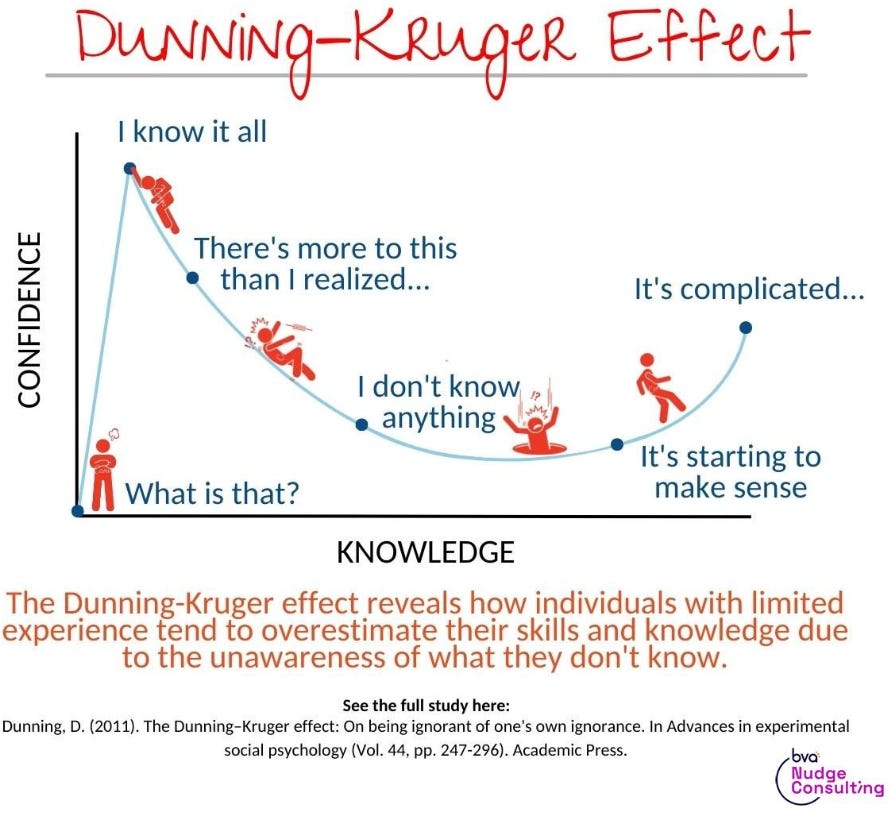
The Dunning-Kruger curve illustrates this perfectly: early overconfidence leads to steep learning curves, but with perseverance, confidence and competence rise in tandem.
Common Beginner Mistakes
Now that we’ve touched on why beginners might feel overwhelmed, let’s look at the specific mistakes they often make, and how to avoid them.
1. Overstocking the Tank
Many beginners are tempted to fill their tank with as many fish as possible right away. This often leads to overcrowding, which overwhelms the tank’s ecosystem. Overpopulation increases waste and reduces oxygen levels, leading to stress and even death for the fish.
How to avoid it: Start slow. Research how many fish your tank can comfortably hold and introduce new fish gradually.
2. Skipping the Nitrogen Cycle
The nitrogen cycle is crucial to maintaining a healthy aquarium, but many new fish keepers skip or rush this process. The cycle establishes beneficial bacteria that break down harmful toxins like ammonia and nitrite. Without it, fish are exposed to toxic water conditions.
How to avoid it: Before adding fish, cycle your tank for 4-6 weeks. Test your water regularly to ensure ammonia and nitrite levels are at zero before introducing any livestock.
3. Improper Feeding
Overfeeding is a common issue that can result in poor water quality and overgrown algae. Uneaten food decomposes, leading to high ammonia levels and polluted water.
How to avoid it: Feed your fish small amounts, once or twice a day, ensuring that all food is eaten within 2-3 minutes.
4. Inconsistent Water Testing and Maintenance
Many beginners neglect regular water testing and cleaning. Poor water quality is the number one killer of aquarium fish, and without regular maintenance, your tank’s conditions can quickly deteriorate.
How to avoid it: Test your water weekly and change 20-25% of your tank’s water at least once a week. Consistency is key to preventing problems before they start.
5. Ignoring Compatibility Issues
Some fish species just don’t get along, whether due to aggression, differing water parameter requirements, or size differences. Beginners may unknowingly add incompatible species, leading to fights, injuries, and stress.
How to avoid it: Research each species' temperament, water needs, and size compatibility before adding them to your tank.
Perseverance is the Key to Success
Here’s the truth: even the most seasoned aquarists have made mistakes. The difference between a successful fish keeper and one who gives up is simple—perseverance. Everyone makes errors when they start, and it’s part of the learning process.
The good news is, with patience, research, and persistence, you’ll overcome these hurdles. Fish keeping is a long-term commitment, and with every challenge, you’ll learn more about your tank’s needs and your fish’s behavior.
“Success is not final, failure is not fatal: It is the courage to continue that counts.” – Winston Churchill
By acknowledging that the journey will have ups and downs, you’ll be better equipped to handle setbacks. Remember, perseverance pays off. Over time, you’ll build a thriving, healthy aquarium—and the confidence that comes with true knowledge.
Conclusion: Stick With It
Fish keeping is a rewarding, fulfilling hobby, but only if you stick with it through the learning curve. Don’t let early setbacks discourage you. With dedication, research, and practice, you can avoid the common mistakes that trip up beginners and set yourself up for long-term success.
If you’re just starting or have struggled in the past, take a deep breath, keep learning, and don’t give up. Soon enough, you’ll be well on your way to mastering the art of fish keeping.
Have you encountered any of these beginner mistakes in your fish keeping journey? I’d love to hear about your experiences! Drop a comment below or reach out if you need advice on any challenges you're facing.